CELPIP Speaking practice test: eight recorded tasks in 15–20 minutes. Preparation is tightly clocked and there is no live examiner mid-task.
Practise these tasks with timers →
Task 1 — Giving Advice
A friend is moving to Vancouver and wants advice on getting around the city without a car. What advice would you give them about using public transit, cycling, or walking? Consider the SkyTrain, BC Ferries, and bike paths.
Timing: 30s preparation, 90s speaking.
Sample high-scoring answer
If a friend were moving to Vancouver and wanted advice on getting around without a car, I would say it is one of the easiest cities in Canada to live car-free. The first thing I would suggest is a Compass Card, because it works on the SkyTrain, buses, and the SeaBus, and I would load it with stored value until they know their routine. For commuting, the SkyTrain is the backbone of the system, but I would warn them that the Expo Line can have delays during rush hour, especially between Main Street and Commercial-Broadway. For shorter trips I would honestly recommend cycling, because the city has invested heavily in separated bike lanes, and the seawall around Stanley Park is both practical and beautiful. Mobi, the bike share program, has stations all over the downtown core and in neighbourhoods like Kitsilano. For the rainy months from October to April, I would tell them to keep a rain jacket handy, since walking is underrated downtown, in Gastown, and in the West End. My overall advice is to combine transit and cycling, check the TransLink app before leaving home, and treat the rain as part of the Vancouver experience.
Task 2 — Talking About Personal Experience
Talk about a time you experienced an unexpected delay while travelling and how you handled the situation. What caused the delay, how did you feel, and what did you learn from the experience?
Timing: 30s preparation, 60s speaking.
Sample high-scoring answer
Last year, I was on my way to a job interview in downtown Vancouver when the SkyTrain suddenly stopped between stations. At first I felt panic rising, because I had prepared for weeks and could not afford to be late. I checked the TransLink app and saw the delay was expected to last twenty minutes. Instead of sitting there worrying, I called the company's receptionist and explained the situation honestly. She was very understanding and offered to push my interview back by half an hour. When I arrived, I apologized to the interviewer and explained what had happened. He said that many Vancouverites face transit delays, and he appreciated how I handled it professionally. In the end, I got the job, and I learned that staying calm and communicating early can turn a stressful situation into a manageable one.
Task 3 — Describing A Scene
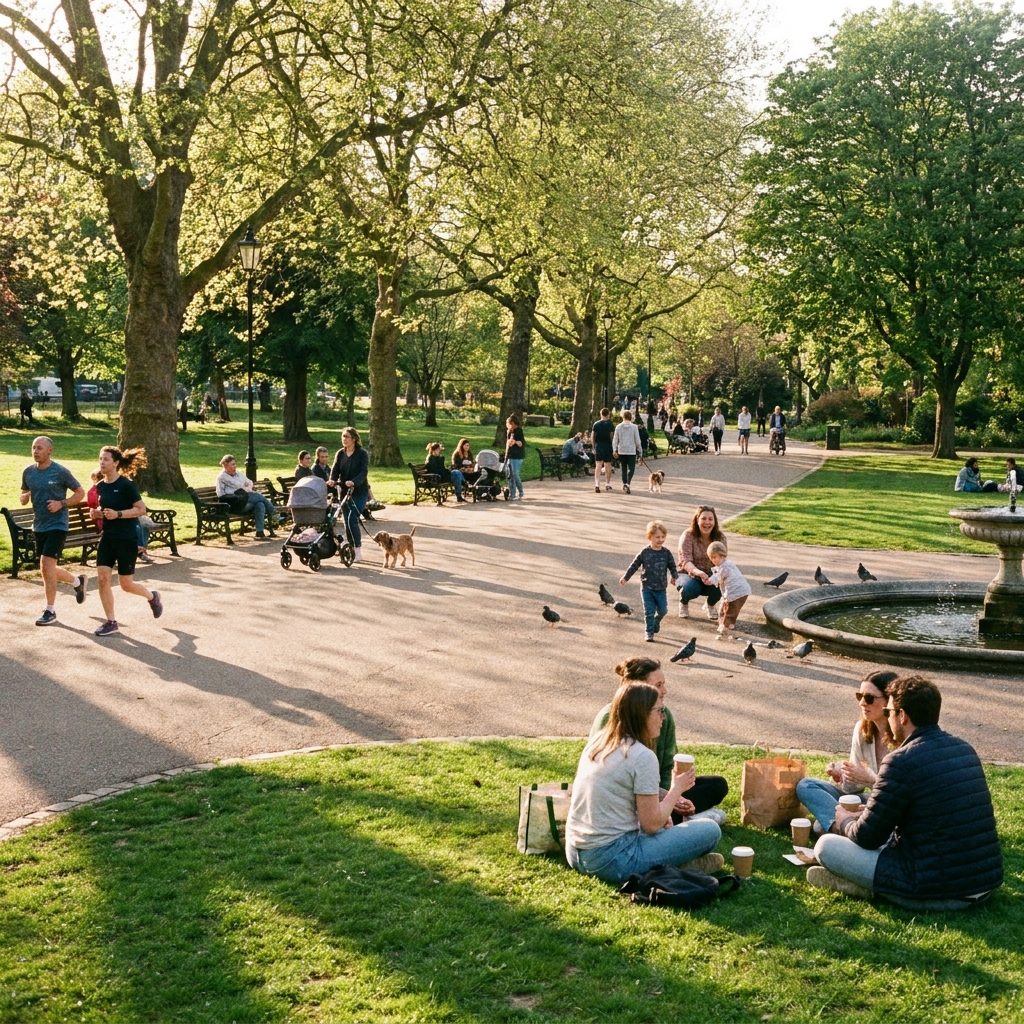
Describe the scene in the picture in as much detail as possible. Talk about the setting, the people, what they are doing and the atmosphere.
Timing: 30s preparation, 60s speaking.
Sample high-scoring answer
It's a bright Saturday afternoon and I'm looking at a city park that is busy but relaxed. The grass is green and freshly mown, and the trees along the path are in full leaf, so there is dappled shade over the benches. In the middle of the frame a wide walkway curves past a small fountain, and people are strolling along it in ones and twos, some pushing strollers and some walking dogs on leads. A few joggers are moving faster on the outside edge, and near the fountain two children are chasing pigeons while a parent watches and laughs. People are sitting on the grass with bags and takeaway cups, just talking. The light is warm and the shadows are long, so it looks like late afternoon. Everyone seems unhurried, and the whole scene feels friendly and calm.
Task 4 — Making Predictions
Look at the same picture again. Predict what happens next in this scene and explain why you think so.
Timing: 30s preparation, 60s speaking.
Sample high-scoring answer
Looking at the same park, the next hour or two is quite easy to predict. It is mid-afternoon and the light is still strong, so the paths are busy, but as the afternoon goes on the sun will drop behind the buildings and the shade will spread across the grass. The first people to leave will be the families with small children, because the little ones near the fountain are already getting tired, so their parents will start packing up the blankets, the bags and the takeaway cups. The walkway will thin out for a while, then a different crowd will arrive: people finishing work who come to run the loop, and dog owners doing their evening walk. The fountain area will stay busiest right to the end, because teenagers gather there, so that corner will be the last to empty as it turns cool.
Task 5 — Comparing And Persuading
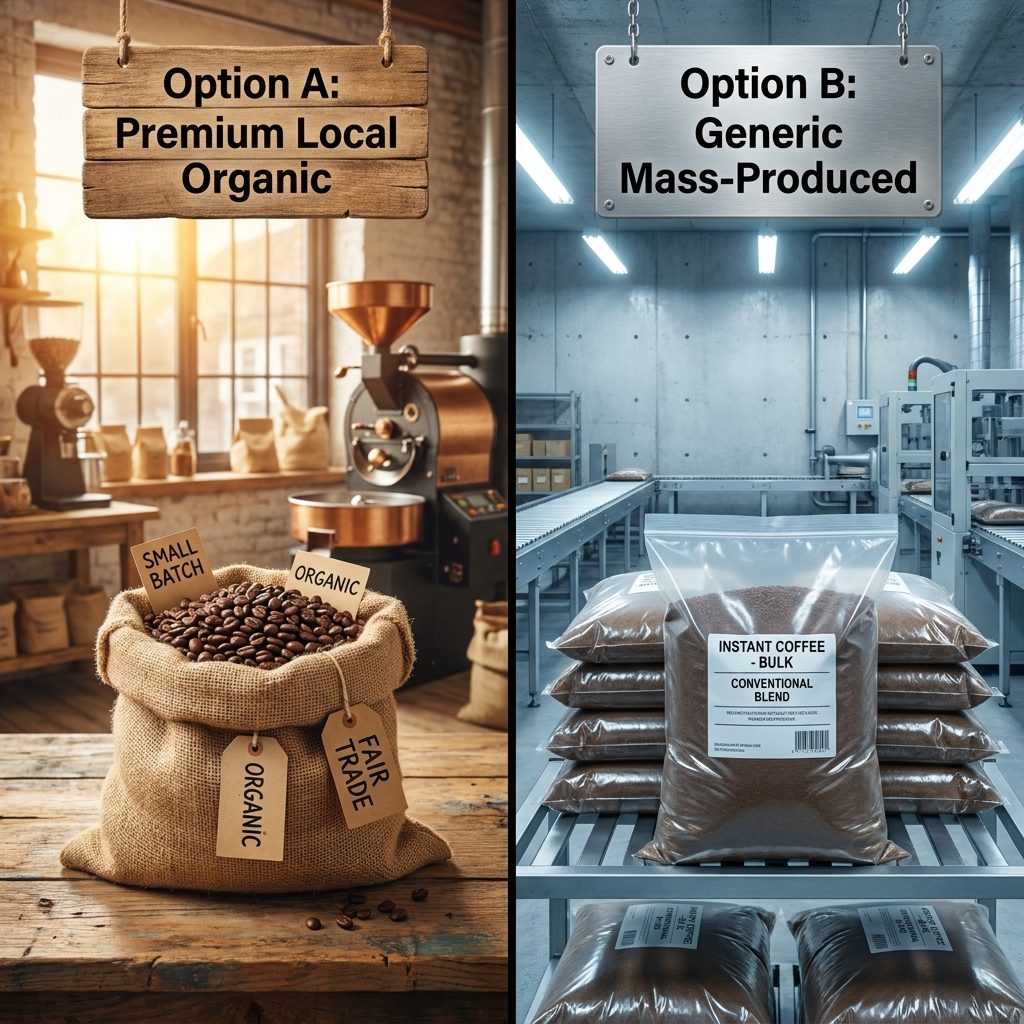
You are a hotel manager deciding between two suppliers for coffee: one is local and organic but more expensive, another is cheaper but from a non-sustainable source. Compare them and persuade your team to choose the local one. Two options are shown as pictures A and B. Choose the one you would recommend and persuade the other person to agree with you. Use the pictures to support your reasons. Both options are shown in one picture, labelled A and B. Choose the one you would recommend and persuade the other person to agree with you. Use the picture to support your reasons.
Timing: 60s preparation, 60s speaking.
Sample high-scoring answer
As a hotel manager choosing between two coffee suppliers, I would compare them carefully. The local Vancouver roaster sources beans from ethical farms and roasts them in Burnaby, so we could promote a genuinely local product to guests, and deliveries would be quick because they are only twenty minutes away. A local partnership would also earn positive attention on social media. The international supplier, on the other hand, offers consistent quality and a much lower price per kilogram, and can guarantee supply all year, while our local roaster sometimes runs short in the busy summer season. Even so, I would choose the local supplier despite the higher cost, because the marketing value and the support for local business outweigh the price difference. I would negotiate a guaranteed supply clause in the contract so that we are never caught short in July and August.
Task 6 — Dealing With Difficult Situation
You are a BC Ferries employee. A customer is angry because their sailing was cancelled due to weather. They demand compensation and immediate alternatives. How do you handle this situation?
Timing: 60s preparation, 60s speaking.
Sample high-scoring answer
If I were a BC Ferries employee and an angry customer approached me because their sailing had been cancelled, I would stay calm and let them express their frustration without interrupting. I would tell them that I completely understand why they are upset, because disrupted travel plans are incredibly frustrating. Then I would offer concrete options straight away. I would check the terminal screen and let them know whether there is a later sailing they can be transferred onto at no additional charge. If the next sailing is hours away, I would suggest the cafe upstairs and offer a complimentary coffee voucher while they wait. For anyone with an urgent commitment, I would mention the seaplane service as an alternative, and if they risked missing a flight, I would write a letter confirming the cancellation.
Task 7 — Expressing Opinions
Some people feel that Vancouver’s rainy weather is a drawback for tourism. Do you agree or disagree? Give reasons and examples.
Timing: 30s preparation, 90s speaking.
Sample high-scoring answer
I strongly disagree with the idea that Vancouver's rainy weather is a drawback for tourism. In fact, I think the rain is part of what makes the city so unique and appealing to visitors. It creates the lush, green landscape that people associate with the Pacific Northwest. Without it, Stanley Park would not have its towering cedars, the North Shore mountains would not have their mist-covered peaks, and the city's gardens would not be nearly as vibrant. Visitors who come during the rainy season also get to experience the city the way locals do, ducking into cozy cafes on Commercial Drive or spending an afternoon in the Vancouver Art Gallery. There is a certain charm to walking across the Burrard Bridge with an umbrella and watching the clouds roll over English Bay that you simply do not get on a bright, cloudless day. I also think the rain shapes the city's relaxed, unhurried culture. People here do not panic when it drizzles; they put on a waterproof jacket and carry on, and I think many visitors find that refreshing. Rather than discouraging tourists, the rain gives them a more authentic experience of this beautiful city.
Task 8 — Describing Unusual Situation
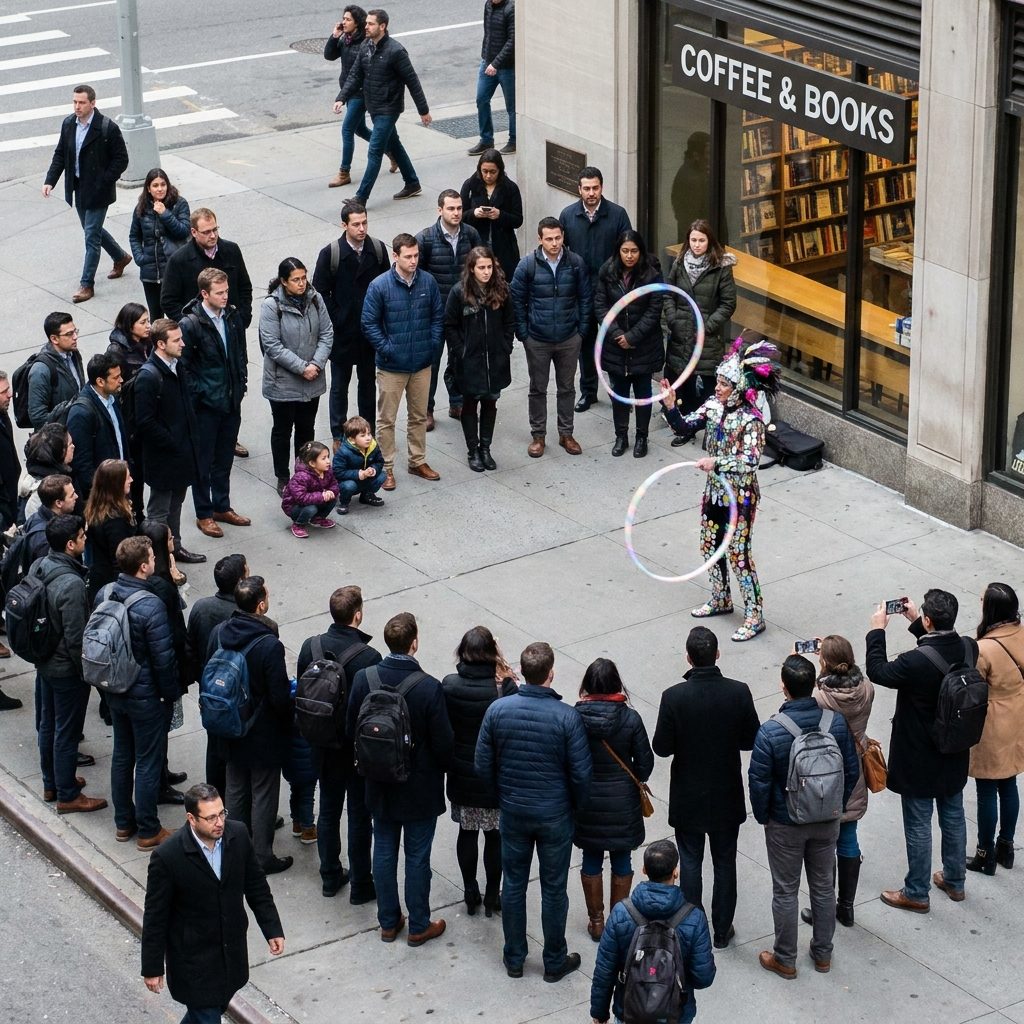
Describe what is unusual or unexpected in this picture. Say what is happening, why it stands out and what you would do in that situation.
Timing: 30s preparation, 60s speaking.
Sample high-scoring answer
It is not the street itself that surprises me, it is what is happening in the middle of it. On an ordinary pavement, in the middle of a normal working day, a performer has set up in front of a shop and a crowd has formed a loose semicircle around him. What makes it unusual is the contrast: everyone else is in ordinary clothes, going about their business, and this one person is dressed up and doing something eye-catching while dozens of strangers stand still and watch. Some people at the back are filming on their phones, and a couple of children have pushed to the front. It stands out because a busy street is usually about movement, and here everyone has stopped. If I were there, I would stand at the edge of the crowd, watch for a minute, and then move on rather than block the pavement.